
Introduction
Energy-efficient windows are more than just an attractive feature of a modern home. They are designed to reduce unwanted heat transfer, improve indoor comfort, and help lower heating and cooling costs. By limiting heat loss during winter and reducing excessive heat gain during summer, these windows can make buildings more comfortable and energy-conscious.
From advanced glass coatings to insulated frames and airtight seals, every component plays an important role in improving window performance. Whether you are building a new home or upgrading an existing property, understanding energy-efficient windows can help you make a better investment.
In this guide, we will explore how energy-efficient windows work, their main components, available types, installation requirements, and long-term benefits.
What Are Energy-Efficient Windows?
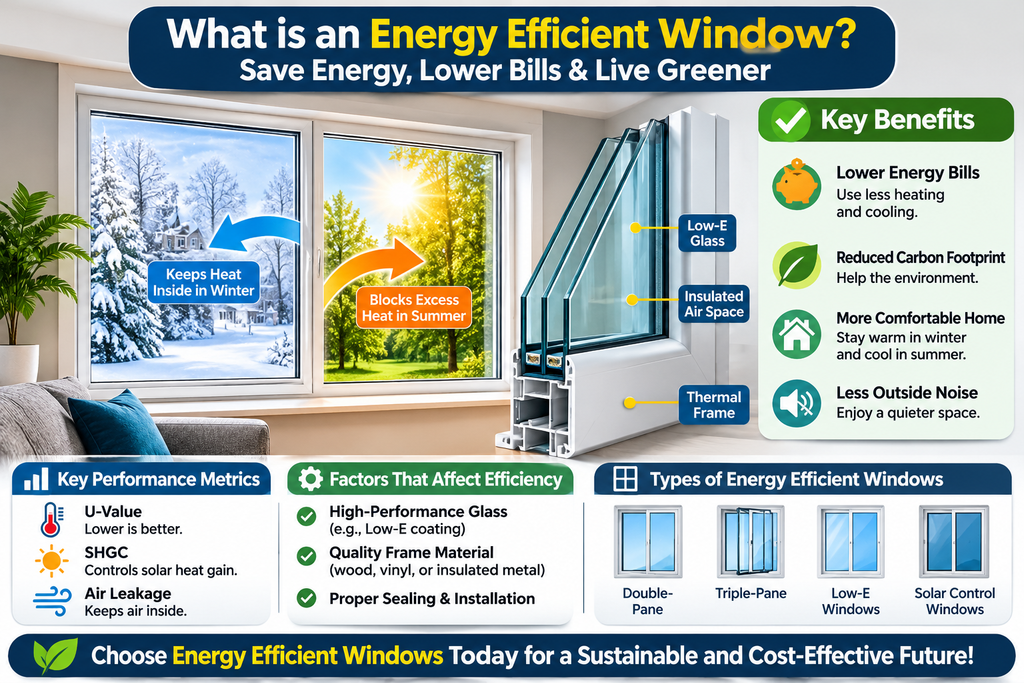
Energy-efficient windows are specially designed windows that reduce the amount of heat transferred between indoor and outdoor environments.
During winter, they help keep indoor heat from escaping. During summer, they reduce unwanted heat entering the building. This helps maintain a more stable indoor temperature and can reduce the workload on heating and cooling systems.
Their performance depends on several factors, including:
- The type and number of glass panes.
- Low-emissivity (Low-E) coatings.
- The material and insulation properties of the frame.
- The gas or air space between glass panes.
- The quality of weatherstripping and installation.
A properly selected and installed energy-efficient window can contribute to a more comfortable and energy-conscious building.
Key Metrics Used to Measure Window Efficiency
Before purchasing energy-efficient windows, it is useful to understand the measurements used to evaluate their performance.
1. U-Value
U-Value measures how quickly heat passes through a window. A lower U-Value indicates better insulation because less heat travels through the window.
For example, a window with a U-Value of 0.30 generally provides better thermal insulation than one with a U-Value of 0.60, assuming the same measurement standard.
2. Solar Heat Gain Coefficient (SHGC)
SHGC measures how much solar heat enters a building through a window.
A lower SHGC is often useful in hot climates because it limits unwanted solar heat. In colder climates, a higher SHGC may be beneficial when additional sunlight and natural warmth are desirable.
3. Air Leakage
Air leakage refers to the amount of outside air that passes through gaps around a window.
Well-designed frames, quality weatherstripping, and professional installation help reduce unwanted drafts and improve overall energy performance.
Main Components of Energy-Efficient Windows
A window’s efficiency depends on how its glass, frame, and sealing system work together.
Window Glass
Glass is the main barrier between indoor and outdoor environments. Its thickness, composition, number of panes, and coatings influence how much heat enters or leaves a building.
Modern energy-efficient windows may use double glazing, triple glazing, or Low-E glass to improve insulation and solar control.
Window Frames
Frames provide structural support, but they also affect thermal performance. Materials with better insulating properties can reduce heat transfer through the frame.
Common options include:
- Insulated vinyl frames.
- Wood frames.
- Aluminum frames with thermal breaks.
- High-performance composite frames.
Choosing the right frame material is important for achieving good overall performance.
Window Seals
Seals and weatherstripping help prevent unwanted air movement around the window. Damaged or poorly installed seals can allow drafts, moisture, and heat transfer.
High-quality sealing materials help maintain a more consistent indoor temperature.
Types of Energy-Efficient Windows
Different window technologies offer different levels of insulation, solar control, and sound reduction.
1. Double-Pane Windows
Double-pane windows contain two layers of glass separated by an insulating space. This space may contain air or an insulating gas such as argon.
<em>Key benefit:</em> They provide better insulation than many traditional single-pane windows.
2. Triple-Pane Windows
Triple-pane windows use three layers of glass with two insulating spaces between them.
They can provide improved thermal insulation and sound reduction, although they may cost more and weigh more than double-pane alternatives.
<em>Key benefit:</em> Suitable for situations where higher insulation performance is important.
3. Low-E Glass Windows
Low-emissivity glass features a special coating that helps control the transfer of heat through infrared radiation.
Depending on the coating and window design, Low-E glass can help reduce heat loss in winter and unwanted heat gain in summer.
<em>Key benefit:</em> Better control over heat transfer without completely blocking natural daylight.
4. Laminated Glass Windows
Laminated glass consists of two or more glass layers bonded together with an interlayer.
This construction can improve safety, reduce certain types of outside noise, and limit the transmission of ultraviolet radiation.
<em>Key benefit:</em> Added strength and sound-control advantages.
5. Solar-Control Windows
Solar-control windows are designed to manage the amount of solar heat entering a building.
They can be particularly useful in areas with strong sunlight, where reducing indoor heat gain can improve comfort and reduce cooling requirements.
<em>Key benefit:</em> Improved solar heat management in warmer conditions.
Technologies That Improve Window Energy Efficiency
Modern energy-efficient windows use several technologies to reduce heat transfer.
Low-E Coatings
Low-E coatings are thin, specialized layers applied to glass surfaces. They reflect a portion of infrared radiation while allowing visible light to pass through.
This helps improve thermal performance and can reduce the amount of energy required for heating and cooling.
Insulating Gas Fills
Some double-pane and triple-pane windows use argon gas between the glass layers.
Argon has lower thermal conductivity than ordinary air, which can reduce heat transfer through the insulating space.
Multiple Glass Panes
Adding more glass panes creates additional insulating spaces. Double- and triple-pane designs can therefore provide better insulation than many single-pane windows.
The overall performance also depends on the spacing, coatings, gas fill, and quality of construction.
Thermally Broken Frames
Metal frames can transfer heat relatively easily. Thermally broken frames use an insulating section between the interior and exterior parts of the frame to reduce this transfer.
This technology helps improve the overall thermal performance of the window.
Installation and Maintenance of Energy-Efficient Windows
Even high-quality windows may perform poorly if they are installed incorrectly. Proper installation and regular maintenance are essential for achieving their expected benefits.
Why Proper Installation Matters
Incorrect installation can create gaps around the frame, allowing air to enter or escape. This can reduce insulation performance and increase heating or cooling requirements.
A professional installation should include:
- Measuring the window opening accurately.
- Checking that the frame is properly aligned and level.
- Securing the frame with suitable fasteners.
- Installing appropriate weatherstripping and sealants.
- Inspecting the finished installation for gaps and air leaks.
Regular Maintenance Tips
To maintain window performance over time:
- Clean glass and frames regularly.
- Inspect weatherstripping for damage.
- Check sealant around the window frame.
- Remove dirt and debris from moving parts and drainage areas.
- Repair damaged seals when necessary.
- Check for condensation or signs of moisture problems.
Regular inspections can help identify small issues before they become expensive repairs.
Common Problems That Reduce Window Efficiency
Several issues can affect the performance of energy-efficient windows.
Damaged Seals: Worn weatherstripping or cracked sealant can allow air leakage.
Poor Installation: Misaligned frames and unsealed gaps can reduce insulation performance.
Dirty Components: Dirt and debris can interfere with window operation and drainage.
Damaged Frames: Cracks, warping, or other physical damage may affect the window’s ability to provide a tight seal.
Moisture Problems: Persistent condensation or water entering around the frame may indicate a sealing or ventilation issue.
Regular maintenance and timely repairs help protect the performance of the window system.
Benefits of Energy-Efficient Windows
Installing energy-efficient windows can provide several financial, practical, and environmental advantages.
1. Lower Energy Bills
By reducing unwanted heat transfer, these windows can help heating and cooling systems operate more efficiently. The actual savings depend on the climate, existing windows, building insulation, and energy usage.
2. Improved Indoor Comfort
Energy-efficient windows help reduce temperature differences near windows and can make indoor spaces more comfortable throughout the year.
3. Reduced Environmental Impact
Lower energy consumption can reduce the demand for electricity and heating fuels. Where energy comes from fossil fuels, this may also help reduce greenhouse gas emissions.
4. Better Noise Reduction
Double-pane and triple-pane windows can help reduce outside noise, depending on their glass thickness, construction, and installation quality.
5. Increased Property Appeal
Energy-efficient features may make a property more attractive to buyers who value comfort and lower operating costs.
6. Long-Term Value
Although some energy-efficient windows require a higher initial investment, their potential energy savings, comfort improvements, and durability can provide long-term value.
Real-World Applications of Energy-Efficient Windows
Energy-efficient windows can be used in residential and commercial buildings.
Residential Buildings
Homeowners may replace older windows with double-pane, triple-pane, or Low-E glass windows to improve insulation and indoor comfort.
Multi-Family Buildings
Apartment buildings can benefit from window upgrades that help improve thermal performance across multiple units.
Commercial Offices
Office buildings may use Low-E and solar-control glass to manage sunlight and reduce unwanted heat gain.
The results of any upgrade depend on the building design, climate, existing insulation, window specifications, and installation quality.
Future Trends in Energy-Efficient Window Technology
Window technology continues to develop as manufacturers look for better ways to reduce energy consumption and improve building performance.
Advanced Glass Coatings
New coating technologies aim to improve solar control and thermal insulation while maintaining natural daylight.
Smart Windows
Smart windows can adjust their light or solar-control properties in response to changing environmental conditions. These technologies may help buildings manage sunlight and indoor temperatures more effectively.
Improved Insulating Materials
Research into advanced polymers, composite materials, and improved glazing systems may lead to windows with better insulation and durability.
Solar-Powered Windows
Some developing window technologies integrate photovoltaic materials to generate electricity from sunlight. These systems demonstrate how windows may become part of a building’s renewable-energy design.
Better Sound Insulation
New glass combinations and window designs are also being explored to improve acoustic performance and reduce unwanted outside noise.
Frequently Asked Questions (FAQs)
1. What makes a window energy-efficient?
A window is considered energy-efficient when its glass, frame, coatings, and seals work together to reduce unwanted heat transfer and air leakage.
2. Are double-pane windows better than single-pane windows?
In general, double-pane windows provide better insulation because they contain two glass layers separated by an insulating space.
3. What is Low-E glass?
Low-E glass has a special coating that helps control infrared heat transfer while allowing natural light to enter.
4. What does U-Value mean?
U-Value measures how quickly heat passes through a window. A lower U-Value generally indicates better thermal insulation.
5. Do energy-efficient windows reduce outside noise?
Many double-pane and triple-pane windows can reduce outside noise, although the results depend on the glass construction and installation.
6. Are energy-efficient windows worth the investment?
They can be worthwhile because they may reduce energy consumption, improve comfort, and increase property appeal. However, the value depends on the initial cost, climate, and potential energy savings.
7. How can I maintain energy-efficient windows?
Clean the glass and frames, inspect seals and weatherstripping, check for air leaks, and repair any damage promptly.
Conclusion
Energy-efficient windows are an important part of modern, sustainable building design. By reducing unwanted heat transfer, improving insulation, and limiting air leakage, they can help create a more comfortable indoor environment while reducing energy consumption.
Understanding U-Value, SHGC, glazing types, frame materials, and installation requirements makes it easier to choose the right windows for your building.
Whether you select double-pane glass, triple-pane windows, Low-E coatings, or solar-control technology, the best choice depends on your climate, budget, and performance requirements.
Investing in suitable energy-efficient windows can be a practical step toward a more comfortable, cost-effective, and environmentally responsible home.