
Introduction
Choosing the right material for your kitchen is an important decision. A good kitchen should not only look attractive but also provide durability, functionality, and easy maintenance. Among the modern materials available today, Aluminum ACP kitchen sets are becoming increasingly popular because of their stylish appearance, lightweight construction, and versatile design options.
Aluminum ACP (Aluminum Composite Panel) is a composite material made from two thin aluminum sheets bonded to a central core. It is widely used in interior decoration, commercial spaces, and modern kitchen applications.
One of the biggest advantages of Aluminum ACP kitchen sets is their ability to create a sleek and contemporary appearance while offering good resistance to moisture and everyday wear. They are also available in different colors, patterns, and surface finishes, making them suitable for various kitchen styles.
However, ACP kitchen sets also have certain disadvantages, including susceptibility to scratches, limited tolerance for direct heat, and variations in material quality.
In this comprehensive guide, we will discuss the advantages and disadvantages of Aluminum ACP kitchen sets, their design options, installation requirements, maintenance tips, and comparison with other kitchen materials. By understanding these factors, you can make a better decision for your kitchen renovation or new installation.
What Are Aluminum ACP Kitchen Sets?
Aluminum ACP kitchen sets are kitchen installations that use Aluminum Composite Panels (ACP) in different components, such as cabinet surfaces, decorative panels, backsplashes, and countertops designed for ACP applications.
These panels consist of two aluminum sheets attached to a central core. The combination creates a lightweight and rigid material that can be cut, shaped, and finished according to different design requirements.
The surface of ACP panels can feature protective coatings that improve their appearance and resistance to environmental conditions.
Common Materials Used in ACP Panels
Aluminum ACP panels generally contain three main components:
- Outer Aluminum Sheets: These provide the external surface, appearance, and structural protection.
- Central Core: The core is bonded between the aluminum sheets. Its composition can vary and affects the panel’s performance and fire characteristics.
- Protective Coating: A surface coating helps improve appearance and resistance to scratches, weathering, and discoloration.
The quality of these materials plays an important role in determining the performance and lifespan of an ACP kitchen installation.
Common Applications of Aluminum ACP
Aluminum ACP panels can be used in several kitchen applications, including:
- Kitchen cabinet doors and decorative panels.
- Backsplash installations.
- Decorative wall coverings.
- Selected countertop applications using suitable panel construction.
- Modern kitchen interior finishes.
Their versatility makes them suitable for homeowners who prefer a contemporary and customized kitchen design.
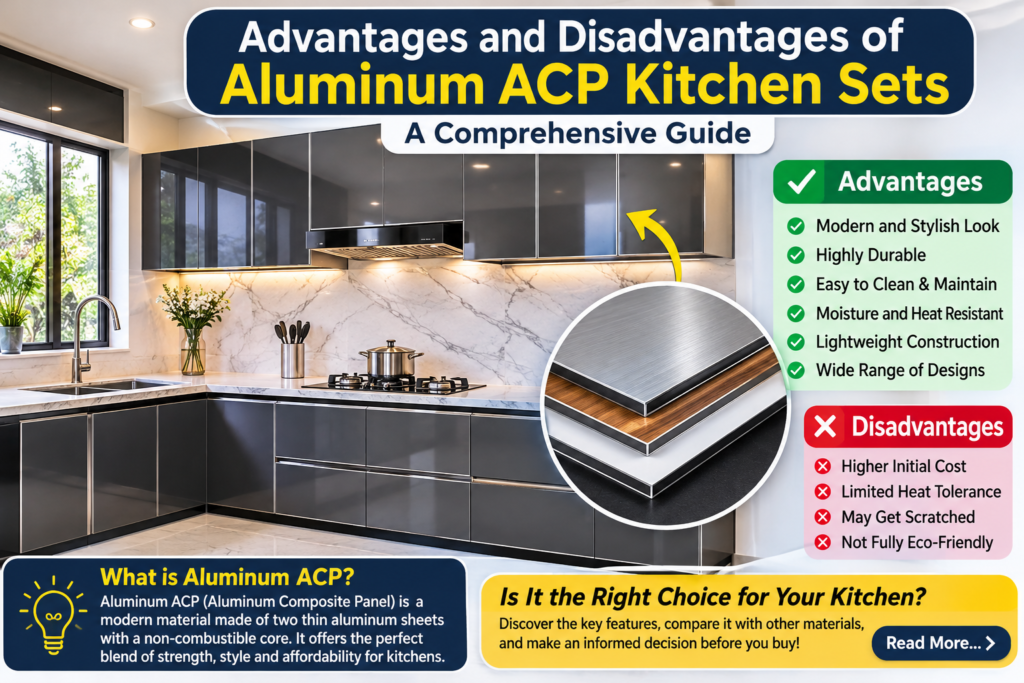
Advantages of Aluminum ACP Kitchen Sets
Aluminum ACP kitchen sets offer several benefits that make them an attractive option for modern homes. Their combination of appearance, lightweight construction, and relatively simple maintenance makes them worth considering.
Let’s explore their main advantages.
1. Modern and Stylish Appearance
One of the biggest advantages of Aluminum ACP kitchen sets is their modern appearance.
They are available in different colors, textures, and finishes, allowing homeowners to create attractive kitchen interiors.
Popular options include:
- Glossy black ACP panels.
- Matte white finishes.
- Metallic silver surfaces.
- Wood-look decorative patterns.
- Grey and charcoal finishes.
These options make it easier to match kitchen cabinets with countertops, flooring, and other interior elements.
2. Lightweight Yet Strong Construction
Aluminum ACP panels are designed to provide rigidity without the weight of many solid materials.
Their lightweight construction makes transportation, handling, and installation easier.
This feature is especially useful for customized kitchen projects where panels need to be cut and fitted into different shapes and sizes.
However, the overall strength of a kitchen installation also depends on its supporting frame, panel thickness, core composition, and fittings.
3. Easy Cleaning and Maintenance
Another important benefit of Aluminum ACP kitchen sets is their relatively easy maintenance.
Their smooth surfaces generally do not allow dirt and grime to accumulate easily. Most everyday stains can be removed using a soft cloth and mild cleaning solution.
Unlike untreated wood, aluminum surfaces do not absorb moisture in the same way.
To maintain their original appearance, avoid abrasive cleaning materials and harsh chemicals that could damage the protective coating.
4. Good Resistance to Moisture
Kitchens are exposed to water, steam, humidity, and food spills on a regular basis.
Aluminum ACP panels offer good resistance to moisture because their aluminum surfaces do not absorb water like untreated wood.
This makes them useful for certain kitchen applications, particularly decorative panels and backsplash installations.
However, proper sealing and installation are important because water can still enter through joints, edges, and poorly protected connections.
5. Customization and Design Flexibility
Aluminum ACP kitchen sets offer a wide range of customization possibilities.
The panels can be cut into different shapes and sizes to suit specific kitchen layouts.
Homeowners can select different colors, finishes, cabinet arrangements, and decorative combinations to create a personalized kitchen interior.
This flexibility makes ACP suitable for both small kitchens and larger modern kitchen spaces.
6. Competitive Long-Term Value
Although the initial cost of Aluminum ACP kitchen sets may be higher than some basic alternatives, their resistance to moisture and relatively low maintenance requirements can provide long-term value.
Reduced maintenance requirements and fewer moisture-related problems may help control ownership costs.
However, actual value depends on panel quality, installation, design, and the price of alternative materials.
Disadvantages of Aluminum ACP Kitchen Sets
Despite their advantages, Aluminum ACP kitchen sets are not perfect for every household.
Before investing in this material, it is important to understand its potential limitations.
1. Susceptibility to Scratches and Dents
Although Aluminum ACP panels are relatively strong, their outer aluminum surfaces can still develop scratches and dents.
Hard objects, sharp utensils, and accidental impacts may damage the protective coating or create visible marks.
Over time, these imperfections can affect the appearance of kitchen cabinets and decorative panels.
Using protective materials during installation and handling kitchen components carefully can help reduce this problem.
2. Limited Heat Resistance
Heat resistance is an important consideration when choosing kitchen materials.
Aluminum ACP panels should not be exposed directly to hot cookware, open flames, or intense heat sources.
Excessive heat can damage the coating, affect the central core, or cause deformation depending on the panel’s construction.
Using heat-resistant pads and maintaining an appropriate distance from cooking appliances can help prevent damage.
Always check the manufacturer’s temperature and fire-performance specifications before using ACP near cooking areas.
3. Risk of Warping and Distortion
Extreme temperature changes and prolonged exposure to high temperatures can affect the shape and structural stability of certain ACP panels.
Thinner panels and lower-quality products may be more vulnerable to deformation.
Correct installation, suitable panel thickness, and proper supporting structures are important for minimizing these risks.
4. Limited Natural Appearance
Aluminum ACP kitchen sets are available in attractive designs, but they may not provide the same natural texture as solid wood or genuine stone.
Some printed finishes can look artificial, particularly when compared with premium natural materials.
Homeowners who prefer traditional textures and natural decorative patterns may find wood or stone more appealing.
5. Fading and Discoloration
Prolonged exposure to direct sunlight can affect the color and appearance of certain ACP surface coatings.
The level of fading depends on the coating quality, product specifications, and environmental conditions.
Choosing UV-resistant finishes and avoiding unnecessary direct sunlight can help maintain the original appearance.
6. Initial Installation Cost
The cost of an Aluminum ACP kitchen set depends on panel quality, thickness, core material, design complexity, hardware, and labor.
Although ACP can provide competitive long-term value, customized designs and premium finishes may increase the initial installation cost.
It is therefore important to compare complete installation quotations rather than considering panel prices alone.
Aluminum ACP Kitchen Sets: Design and Style Options
Aluminum ACP panels provide flexibility when designing modern kitchen interiors.
Different finishes and color combinations can create completely different appearances.
Modern Kitchen Designs
Modern kitchens often feature simple cabinet arrangements, clean lines, and minimal decorative details.
Glossy black, metallic silver, matte grey, and white ACP finishes can create an elegant contemporary appearance.
Combining these finishes with modern lighting and suitable countertops can further improve the overall design.
Traditional Kitchen Designs
Although ACP is commonly associated with modern interiors, it can also be incorporated into traditional kitchen designs.
Wood-look finishes, warm colors, and decorative cabinet arrangements can create a more classic appearance.
Combining ACP panels with suitable wooden elements can provide an attractive balance between traditional and contemporary styles.
Customized Kitchen Layouts
ACP panels can be incorporated into different kitchen layouts depending on the design requirements.
Popular layouts include:
- L-shaped kitchen designs.
- U-shaped kitchen designs.
- Straight kitchen arrangements.
- Open-concept kitchen designs.
- Kitchen islands with decorative ACP panels.
The final design should consider available space, storage requirements, ventilation, and appliance placement.
Installation and Maintenance of Aluminum ACP Kitchen Sets
Proper installation is essential for ensuring the stability, appearance, and performance of an Aluminum ACP kitchen set.
Incorrect measurements, weak supporting structures, and unsuitable fittings can create problems over time.
Step-by-Step Installation Process
1. Prepare the Installation Area
Measure the available kitchen space carefully and ensure that the supporting surfaces are suitable for installation.
2. Inspect the ACP Panels
Before installation, inspect all panels for scratches, dents, coating defects, and other visible damage.
3. Measure and Cut the Panels
Use accurate measurements and suitable cutting equipment to prepare the panels according to the kitchen design.
4. Assemble the Supporting Structure
Prepare the required framework, fittings, and supporting components to ensure proper stability.
5. Install the ACP Panels
Attach the panels according to the manufacturer’s instructions and use suitable fixing methods.
6. Perform a Final Inspection
Check panel alignment, joints, edges, cabinet doors, and other connections to ensure that everything is properly installed.
Professional installation is recommended for complex kitchen designs.
How to Maintain Aluminum ACP Kitchen Sets
Regular maintenance can help preserve the appearance of ACP kitchen components.
Follow these simple recommendations:
- Clean surfaces with a soft microfiber cloth.
- Use mild soap and water for routine cleaning.
- Avoid abrasive cleaners and rough scrubbing pads.
- Do not place hot cookware directly on ACP surfaces.
- Protect panels from unnecessary impacts.
- Clean food spills and stains promptly.
- Inspect joints, edges, and fittings regularly.
- Follow the manufacturer’s maintenance recommendations.
These practices can help extend the useful life of your kitchen installation.
Safety and Health Considerations of Aluminum ACP
Safety is another important factor when selecting Aluminum ACP kitchen materials.
ACP panels contain aluminum sheets, a central core, and potentially different coatings and additives. Their exact composition varies depending on the manufacturer and product type.
Some products may contain substances that release volatile organic compounds (VOCs), depending on their coatings, adhesives, and core materials.
For this reason, buyers should consider the following precautions:
- Purchase ACP panels from reputable manufacturers.
- Request product specifications and material safety documentation.
- Check VOC emission information where available.
- Confirm the fire classification of the panel.
- Use suitable products for indoor kitchen applications.
- Ensure proper ventilation during installation.
- Avoid using products without clear material specifications near heat sources.
Fire Safety and ACP Core Materials
Not all ACP panels have the same fire performance.
Some panels use polymer-based cores, while specialized products may use fire-retardant or mineral-filled cores.
A fire-retardant panel should not automatically be considered non-combustible.
If fire safety is a priority, check the relevant fire-test certification and local building requirements before purchasing.
Comparison of Aluminum ACP with Other Kitchen Materials
Choosing the right kitchen material requires comparing different options based on appearance, durability, maintenance, and cost.
Here is a general comparison of Aluminum ACP with wood, laminate, and stainless steel.
| Feature | Aluminum ACP | Wood | Laminate | Stainless Steel |
|---|---|---|---|---|
| Appearance | Modern and sleek | Natural and warm | Various designs | Industrial and modern |
| Durability | Good, depending on quality | Depends on wood type | Moderate | High |
| Maintenance | Relatively easy | Requires regular care | Relatively easy | Easy |
| Moisture Resistance | Good | Depends on treatment | Varies | Excellent |
| Heat Resistance | Limited by panel construction | Varies | Generally limited | Excellent |
| Design Options | Wide variety | Natural textures | Extensive | Limited finishes |
| Cost | Generally mid-range | Variable | Generally affordable | Generally higher |
Aluminum ACP vs Wood
Wood provides a natural appearance and a warm atmosphere.
However, it may require additional maintenance to protect it against moisture, scratches, and other forms of damage.
Aluminum ACP offers a more contemporary appearance and generally requires less surface maintenance.
Aluminum ACP vs Laminate
Laminate is a popular choice because of its affordability and variety of designs.
ACP offers a different combination of metal surfaces, lightweight construction, and modern finishes.
The better option depends on the intended application and product quality.
Aluminum ACP vs Stainless Steel
Stainless steel is highly resistant to heat, moisture, and corrosion, making it suitable for demanding kitchen environments.
Aluminum ACP offers greater decorative flexibility in some applications and can provide a different visual style.
However, stainless steel is generally a better choice for surfaces that regularly experience direct heat.
Environmental Impact and Recycling of Aluminum ACP
Environmental sustainability is becoming an increasingly important consideration in modern kitchen renovations.
Aluminum ACP consists of aluminum and a central core, which means its environmental impact depends on manufacturing processes, raw material sourcing, transportation, and disposal.
Aluminum is recyclable and can be recovered for reuse.
However, separating aluminum sheets from the central core can make ACP recycling more complicated than recycling single-material products.
Consumers interested in sustainable materials should consider:
- Products containing recycled aluminum.
- Manufacturers with responsible production practices.
- Durable panels that do not require frequent replacement.
- Available recycling facilities.
- Proper disposal of composite materials.
Choosing quality products and maintaining them properly can also help reduce unnecessary material waste.
Frequently Asked Questions (FAQs)
1. Are Aluminum ACP kitchen sets a good choice?
Yes, Aluminum ACP kitchen sets can be a good choice for homeowners who prefer modern designs, lightweight materials, and relatively easy maintenance.
However, panel quality, heat exposure, and installation requirements should be considered before purchasing.
2. Are Aluminum ACP kitchen cabinets waterproof?
Aluminum ACP surfaces offer good resistance to moisture, but the complete cabinet system is not necessarily waterproof.
Joints, edges, supporting structures, and fittings still require proper protection against water exposure.
3. Can Aluminum ACP kitchen sets withstand heat?
ACP panels have limitations when exposed to high temperatures.
They should not be placed in direct contact with hot cookware or open flames. Always follow the manufacturer’s heat-performance specifications.
4. Do Aluminum ACP panels get scratched?
Yes. Although ACP panels are relatively durable, their external aluminum coating can develop scratches and dents through rough handling or accidental impacts.
5. Are Aluminum ACP kitchen sets easy to clean?
Yes. Most smooth ACP surfaces can be cleaned using a soft cloth and mild cleaning solution.
Avoid harsh chemicals and abrasive materials to protect the surface coating.
6. Can Aluminum ACP panels be customized?
Yes. ACP panels can be cut and finished in different sizes, colors, and patterns.
This allows manufacturers and installers to create customized kitchen designs.
7. Are Aluminum ACP panels environmentally friendly?
Aluminum is recyclable, but the composite construction of ACP makes recycling more complicated because its different layers need to be separated.
The environmental impact depends on the materials, manufacturing process, product lifespan, and recycling facilities available.
8. How do I choose good-quality Aluminum ACP panels?
Check the panel thickness, aluminum skin specifications, core composition, surface coating, manufacturer reputation, and warranty.
Also ask for relevant fire-performance and indoor-use certifications before making a purchase.
Conclusion: Are Aluminum ACP Kitchen Sets Worth Buying?
Aluminum ACP kitchen sets offer an attractive combination of modern appearance, lightweight construction, moisture resistance, and relatively easy maintenance.
Their wide range of colors and finishes makes them suitable for homeowners who want a contemporary and customized kitchen interior.
However, they also have certain limitations. Scratches, dents, limited heat tolerance, potential deformation, and variations in product quality should be considered before investing in an ACP kitchen set.
The right choice ultimately depends on your budget, design preferences, kitchen requirements, and long-term expectations.
If you want a stylish kitchen with modern finishes and convenient maintenance, Aluminum ACP can be a practical option. However, if your priority is direct heat resistance or the natural appearance of traditional materials, alternatives such as stainless steel or solid wood may be more suitable.
Before purchasing, compare different manufacturers, check product specifications, and choose professional installation to get the best possible results.