
Choosing the right exterior siding is an important part of designing and protecting your home. Siding does more than improve curb appeal—it also helps protect exterior walls from moisture, wind, and changing weather conditions.
Among the many available styles, shake, scallop, and shingle siding are popular choices for homeowners who want an attractive and distinctive exterior. Although these options may look similar at first, they differ in appearance, construction, maintenance, durability, and installation costs.
In this guide, we’ll explore the differences between shake, scallop, and shingle siding to help you determine which option best matches your home’s architectural style, maintenance preferences, and budget.
Understanding Exterior Siding
Exterior siding is the outer protective covering installed on a home’s walls. It serves both decorative and functional purposes by improving the appearance of a building while helping protect its structure from environmental conditions.
Common siding materials include:
- Wood: Offers a natural appearance and traditional character.
- Vinyl: Provides an affordable, low-maintenance alternative.
- Fiber Cement: Combines durability with different design possibilities.
- Metal: Known for its strength and resistance to weather.
- Engineered Composite: Offers different textures and styles with relatively low maintenance.
The right siding material depends on your local climate, installation budget, architectural design, and long-term maintenance expectations.
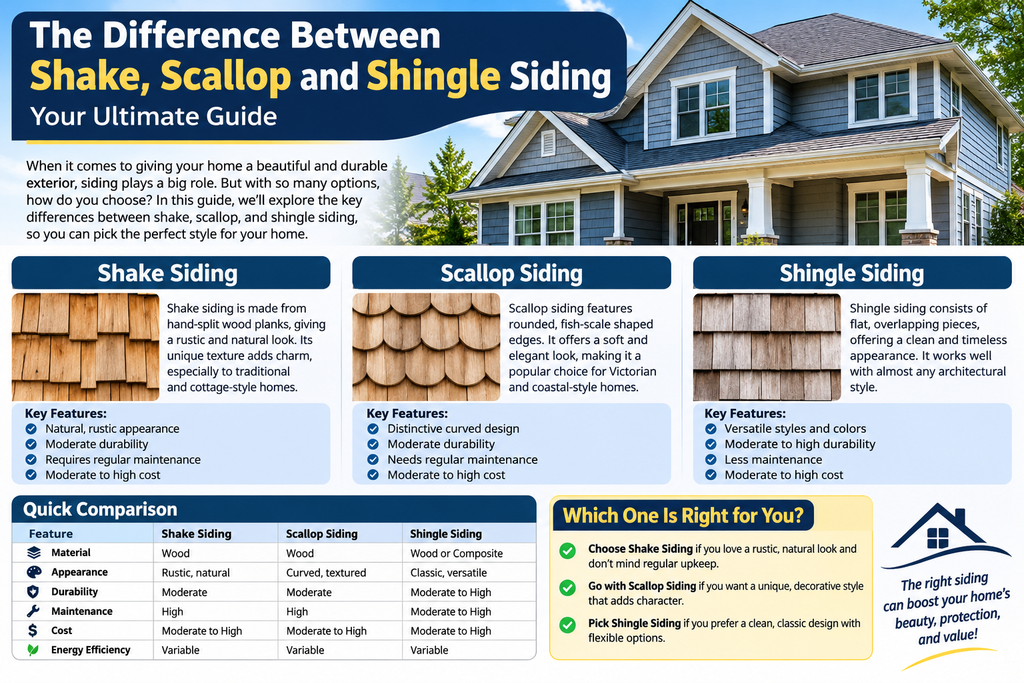
1. Shake Siding: A Natural and Rustic Appearance
Shake siding is a traditional exterior covering known for its textured surface and natural wood appearance. It is commonly made from wood pieces that are split or shaped to create an irregular, handcrafted look.
This style works particularly well with Craftsman, farmhouse, cottage, and rustic architectural designs.
Materials Used in Shake Siding
Several wood species are commonly used:
- Cedar: Popular for its natural resistance to moisture and decay.
- Redwood: Offers a rich reddish-brown appearance and resistance to deterioration.
- Cypress: Known for its resistance to insects and rot.
- Pine: A more affordable option, although it generally requires additional maintenance.
The selected wood affects the siding’s appearance, cost, durability, and expected lifespan.
Advantages of Shake Siding
- Creates a natural and distinctive exterior.
- Adds texture and character to residential buildings.
- Complements traditional and rustic architectural styles.
- Offers different wood species and design possibilities.
Disadvantages of Shake Siding
- Requires regular cleaning and maintenance.
- May be vulnerable to moisture, rot, and insects.
- Installation can involve additional labor.
- Matching replacement pieces and colors can be difficult.
Shake Siding Installation
Installing shake siding requires a properly prepared wall surface and careful placement of individual pieces. Contractors must pay attention to spacing, alignment, fastening, and water protection.
Proper installation and sealing help reduce the risk of moisture damage and extend the siding’s useful life.
2. Scallop Siding: A Decorative and Elegant Design
Scallop siding is recognized by its rounded, curved edges, which create a decorative pattern across the exterior of a building.
Sometimes called fish-scale siding, this style adds visual interest and a distinctive architectural appearance. It is especially suitable for Victorian, coastal, and traditional home designs.
Materials Used in Scallop Siding
Scallop siding is available in several materials:
- Wood: Provides a warm, natural appearance but needs regular maintenance.
- Vinyl: Offers a lightweight, low-maintenance option that resists rot.
- Fiber Cement: Provides durability and resistance to many environmental conditions.
Each material offers different benefits in terms of cost, appearance, and maintenance.
Advantages of Scallop Siding
- Creates a unique and decorative exterior.
- Adds depth and texture to exterior walls.
- Works well with traditional architectural designs.
- Available in different materials and finishes.
Disadvantages of Scallop Siding
- Installation may require specialized skills.
- Decorative patterns can increase labor costs.
- Wood versions require regular maintenance.
- Individual pieces may need attention after severe weather.
Scallop Siding Installation
Installing scallop siding requires accurate measurements and proper alignment to maintain a consistent decorative pattern.
The installation process depends on the selected material and manufacturer instructions. A suitable supporting structure and correct fastening methods are important for long-term performance.
3. Shingle Siding: A Versatile and Classic Option
Shingle siding is a flexible exterior design that uses overlapping pieces installed across the walls of a building.
Unlike the more irregular appearance of shake siding, shingles generally provide a more uniform and organized finish. They are available in traditional, contemporary, and rustic styles.
Homeowners can choose from different colors, textures, and materials to complement their property’s architectural design.
Types of Shingle Siding Materials
Wood Shingles
Wood shingles provide a traditional appearance and natural texture. However, they require regular sealing, painting, or other protective treatments to reduce the risk of moisture damage and insect infestation.
Composite Shingles
Composite shingles combine different materials to create a durable alternative to natural wood. They generally require less maintenance and may offer improved resistance to moisture and pests.
Metal Shingles
Metal shingles are commonly manufactured using steel or aluminum. They offer excellent durability and weather resistance while providing a more contemporary appearance.
Advantages of Shingle Siding
- Available in numerous colors and designs.
- Suitable for different architectural styles.
- Composite and metal options can provide long-term durability.
- Some materials require relatively little maintenance.
- Offers flexibility in exterior design.
Disadvantages of Shingle Siding
- Wood versions require regular maintenance.
- Metal options can have higher initial costs.
- Material quality significantly affects performance.
- Installation must follow the manufacturer’s specifications.
Shingle Siding Installation
The installation process usually begins with preparing and inspecting the wall sheathing. Damaged areas should be repaired before installation.
Individual shingles are then secured using suitable fasteners. Correct spacing, overlapping, and alignment help create a consistent appearance and protect the underlying structure.
Shake vs. Scallop vs. Shingle Siding: Main Differences
Understanding the main differences between these siding styles makes it easier to select the right option.
| Feature | Shake Siding | Scallop Siding | Shingle Siding |
|---|---|---|---|
| Appearance | Rustic and natural | Rounded and decorative | Classic and versatile |
| Common Materials | Wood | Wood, vinyl, fiber cement | Wood, composite, metal |
| Texture | Irregular | Curved and patterned | Uniform or varied |
| Durability | Moderate | Moderate | Moderate to high |
| Maintenance | High | Material dependent | Material dependent |
| Cost | Moderate to high | Moderate to high | Moderate to high |
| Design Options | Traditional and rustic | Decorative and traditional | Traditional and modern |
Actual performance depends on the material selected, product quality, installation, and environmental conditions.
Cost Comparison of Shake, Scallop, and Shingle Siding
Installation costs can vary considerably depending on material quality, project size, labor rates, and installation complexity.
The following figures are approximate estimates from the source material:
| Siding Type | Estimated Installation Cost per Sq. Ft. |
|---|---|
| Shake Siding | $8–$15 |
| Scallop Siding | $7–$14 |
| Shingle Siding | $5–$12 |
These estimates should be treated as general reference figures rather than guaranteed market prices. Requesting local contractor quotations is recommended before starting a project.
Durability and Expected Lifespan
Durability is another important factor when comparing exterior siding materials.
The expected lifespan depends on installation quality, environmental exposure, and maintenance.
| Material | Typical Lifespan | Maintenance |
|---|---|---|
| Wood | 15–25 years | Regular sealing, painting, and repairs |
| Composite | 25–50 years | Occasional cleaning |
| Metal | 50+ years | Occasional cleaning |
These figures are general estimates and can vary by manufacturer and product specification.
Wood siding may require additional protection against moisture and insects, while composite and metal products can offer longer-lasting performance with less frequent maintenance.
How to Choose the Right Siding for Your Home
Before selecting a siding style, consider the following important factors.
1. Local Climate
Weather conditions can significantly influence siding performance.
Homes in areas with heavy rainfall need materials that provide reliable moisture protection. Properties exposed to strong winds or extreme temperatures may benefit from siding designed for demanding environmental conditions.
2. Budget and Installation Costs
Your available budget should include both material and installation expenses.
Some siding options have relatively affordable initial costs but require more maintenance over time. Others may cost more initially while offering longer service life.
3. Architectural Style
The siding should complement the overall appearance of your home.
- Choose shake siding for rustic and farmhouse designs.
- Consider scallop siding for decorative and Victorian-style properties.
- Select shingle siding for classic, contemporary, and versatile designs.
4. Maintenance Requirements
Think about how much time and money you are willing to spend maintaining your exterior.
Wood siding generally needs more attention than many composite and metal alternatives. Selecting a material that matches your maintenance preferences can make long-term ownership easier.
5. Professional Installation
A qualified siding contractor can help evaluate your home’s exterior, recommend appropriate materials, and explain installation requirements.
Professional installation is particularly important for decorative siding styles that require precise measurements and alignment.
Final Thoughts
Shake, scallop, and shingle siding each offer different advantages for homeowners looking to improve their property’s exterior.
Shake siding is an excellent choice for people who appreciate natural textures and rustic designs. Scallop siding provides decorative curves and distinctive architectural character, while shingle siding offers versatility, multiple material choices, and a classic appearance.
There is no single option that works best for every property. The right decision depends on your budget, architectural preferences, local climate, and willingness to handle ongoing maintenance.
By comparing these three siding styles carefully and consulting an experienced contractor, you can choose an exterior solution that enhances your home’s appearance, protection, and long-term value.