
Choosing the right siding for your home involves more than selecting an attractive color or design. Your local climate plays an important role in determining how well exterior materials perform over time. Rain, humidity, strong winds, extreme temperatures, and intense sunlight can all affect the durability and appearance of your home’s exterior.
Different siding materials respond differently to environmental conditions. Some provide excellent moisture resistance, while others offer strength, insulation, or a natural appearance. Understanding these differences can help homeowners make better decisions and avoid unnecessary maintenance expenses.
In this comprehensive guide, we’ll explore how climate influences siding selection, compare popular materials, discuss regional weather conditions, and explain how to maintain your home’s exterior for long-term performance.
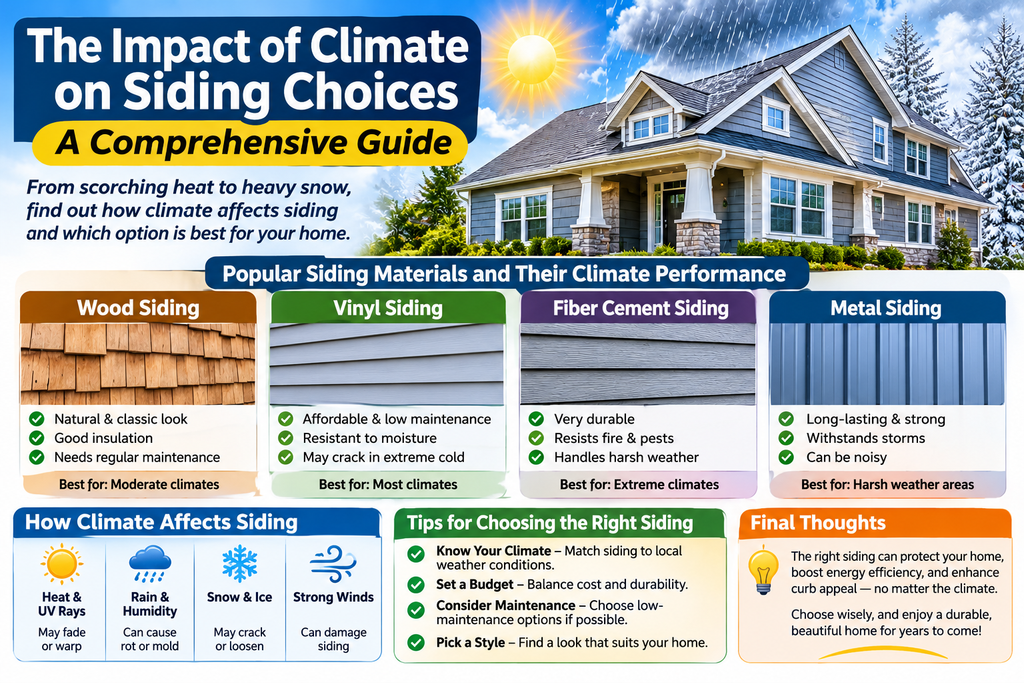
1. Understanding Different Types of Siding Materials
Exterior siding acts as a protective covering for residential buildings. It helps shield exterior walls from weather exposure while contributing to insulation, energy efficiency, and overall curb appeal.
Before selecting siding, it is important to understand the characteristics of commonly available materials.
Wood Siding
Wood siding remains a popular option because of its natural appearance, warmth, and versatility. It can be painted or stained in different colors to complement traditional and modern architectural styles.
Key Features:
- Natural and attractive appearance.
- Can be customized with different finishes.
- Provides some natural insulating properties.
- Requires regular cleaning, sealing, and painting.
- Can be vulnerable to moisture, rot, and insects.
Wood siding can perform well when properly treated and maintained. However, homeowners in humid or rainy regions should pay particular attention to moisture protection.
Vinyl Siding
Vinyl siding is widely used because it is relatively affordable and requires less maintenance than many traditional materials.
It is manufactured in different colors, textures, and profiles, including designs that imitate natural wood.
Key Features:
- Resistant to rot and insect damage.
- Handles moisture exposure well.
- Available in various colors and styles.
- Requires occasional cleaning.
- Can experience expansion, cracking, or warping under certain temperature conditions.
Vinyl is a practical option for homeowners looking for a relatively low-maintenance exterior.
Metal Siding
Metal siding, commonly made from steel or aluminum, is known for its strength and durability. It can provide reliable protection against various weather conditions when properly selected and installed.
Key Features:
- Strong and long-lasting.
- Resistant to many forms of weather damage.
- Available in different finishes and colors.
- Requires relatively little maintenance.
- May experience corrosion if protective coatings are damaged or unsuitable for the environment.
Metal siding can be particularly useful in locations where durability and resistance to harsh weather are important considerations.
Fiber Cement Siding
Fiber cement siding combines cement-based materials with reinforcing fibers to create a durable exterior covering.
It can reproduce the appearance of wood while offering resistance to rot, insects, and fire.
Key Features:
- Strong and durable construction.
- Resistant to rot and insect damage.
- Offers different textures and finishes.
- Can be painted in various colors.
- Requires appropriate installation and periodic inspections.
Fiber cement is a versatile choice for homeowners who want a balance between appearance and durability.
2. Comparing Popular Siding Materials
The following table provides a general comparison of common siding options.
| Siding Material | Estimated Lifespan | Maintenance | Approximate Cost |
|---|---|---|---|
| Wood | 20–30 years | High | $5–$15/sq. ft. |
| Vinyl | 50–75 years | Low | $5–$10/sq. ft. |
| Metal | 50–75+ years | Low | $8–$15/sq. ft. |
| Fiber Cement | 50–75+ years | Low | $10–$20/sq. ft. |
Note: These figures are general estimates from the source material. Actual lifespan and installation costs depend on product quality, location, labor, and maintenance.
3. Major Climate Factors That Affect Siding Performance
Climate conditions can influence the lifespan, appearance, and maintenance requirements of exterior siding.
Four major environmental factors deserve particular attention.
Rainfall and Moisture
Frequent rainfall can increase the risk of water damage, especially when siding is poorly installed or inadequately maintained.
Wood materials may absorb moisture, increasing the possibility of rot and deterioration. Materials with better moisture resistance can be more suitable for regions experiencing frequent rainfall.
Proper drainage, flashing, and installation are also important for preventing water from entering behind exterior walls.
Temperature Fluctuations
Extreme temperature changes can cause some siding materials to expand and contract.
Repeated movement may contribute to cracking, warping, or damage over time. Homeowners in regions with significant seasonal temperature changes should consider materials designed to handle these conditions.
Humidity
High humidity creates favorable conditions for mold and mildew growth, particularly on surfaces that remain damp.
Wood siding generally requires additional protection in humid environments. Vinyl and fiber cement are commonly considered for their moisture-resistant properties.
Proper ventilation and regular inspections can also help reduce moisture-related problems.
Strong Winds
High winds can loosen or detach siding panels, especially when fastening and installation are inadequate.
Wind resistance depends on the siding product, fastening system, wall construction, and installation quality.
Homes in coastal and mountainous areas should consider materials and installation systems suitable for their local wind conditions.
4. How Different Weather Patterns Influence Siding Selection
Not every siding material performs equally well in every environment.
Understanding regional weather conditions makes it easier to identify suitable options.
Coastal Regions
Coastal locations often experience high humidity, salt spray, heavy rainfall, and strong winds.
These conditions can accelerate deterioration in materials that are not properly protected.
Recommended options:
- Vinyl siding for its resistance to moisture and rot.
- Fiber cement for its durability and resistance to moisture.
- Properly treated wood when homeowners prefer a natural appearance.
Metal siding can also be considered, but protective coatings and corrosion resistance are important factors in coastal environments.
Mountainous Regions
Mountainous areas can experience freezing temperatures, heavy snowfall, and strong winds.
Siding materials should be capable of handling temperature changes without excessive cracking or warping.
Recommended options:
- Fiber cement for durability.
- Treated wood for a traditional appearance.
- Properly coated metal for strength and weather resistance.
Correct installation is particularly important in areas exposed to heavy snow and strong winds.
Desert Regions
Desert climates are generally characterized by intense sunlight, high temperatures, and low humidity.
Materials should be selected with heat resistance, UV protection, and thermal performance in mind.
Recommended options:
- Reflective metal siding.
- Fiber cement siding.
- Properly treated wood products.
Reflective finishes may help reduce heat absorption, depending on the product and installation system.
Humid Regions
High humidity can increase the risk of moisture-related damage and fungal growth.
Homeowners should prioritize materials that resist moisture absorption and are suitable for humid environments.
Recommended options:
- Vinyl siding.
- Fiber cement siding.
- Properly protected metal siding.
Regular cleaning and inspections can help identify problems before they become expensive repairs.
5. Climate-Based Siding Recommendations
| Climate Type | Suitable Siding Options | Main Considerations |
|---|---|---|
| Coastal | Vinyl, Fiber Cement, Treated Wood | Moisture, salt spray, wind |
| Mountainous | Fiber Cement, Treated Wood, Metal | Snow, freezing temperatures, wind |
| Desert | Metal, Fiber Cement, Treated Wood | Heat, sunlight, UV exposure |
| Humid | Vinyl, Fiber Cement, Metal | Moisture, mold, corrosion |
These recommendations provide general guidance. The best option depends on the specific product, local building requirements, and installation conditions.
6. The Relationship Between Siding and Energy Efficiency
Siding can contribute to a home’s overall energy performance, although the complete wall assembly plays a much larger role than the exterior material alone.
Insulation, air sealing, ventilation, and installation quality all influence indoor comfort and heating or cooling requirements.
Wood Siding
Wood has some natural insulating properties, but its thermal performance depends on thickness and the overall wall construction.
Proper insulation behind the siding is important for improving energy efficiency.
Vinyl Siding
Vinyl siding provides a protective exterior finish and is available in insulated versions.
Insulated vinyl products may improve the thermal performance of exterior walls when installed as part of a suitable wall system.
Fiber Cement Siding
Fiber cement is valued for its durability and resistance to environmental damage. However, it generally needs separate insulation behind it to achieve good thermal performance.
Metal Siding
Metal siding can transfer heat relatively quickly. Reflective finishes and appropriate insulation behind the panels can help improve overall building performance.
How Siding Helps Reduce Energy Consumption
Several installation practices can improve energy efficiency:
- Proper Insulation: Helps reduce unwanted heat transfer.
- Air Sealing: Reduces drafts and uncontrolled air movement.
- Moisture Control: Helps protect insulation and structural components.
- Correct Installation: Supports the performance of the entire exterior wall system.
Choosing suitable siding alongside proper insulation can improve comfort and help manage energy consumption.
7. Maintenance Requirements in Different Climates
Regular maintenance is essential for protecting siding and extending its useful life.
The required maintenance schedule depends on the material, local weather, and exposure to environmental conditions.
Maintenance by Climate
| Material | Dry Climate | Moderate Climate | Humid Climate | Snowy Climate |
|---|---|---|---|---|
| Vinyl | Annual cleaning and inspection | Periodic cleaning | More frequent cleaning | Inspect after snowmelt |
| Wood | Regular sealing | Check for rot and insects | Inspect for mold and moisture | Inspect for weather damage |
| Fiber Cement | Annual inspection | Periodic inspection | Check joints and finishes | Inspect after snowmelt |
| Metal | Check protective finish | Periodic inspection | Check for corrosion | Inspect after snowmelt |
Preventative Maintenance Tips
Homeowners can protect their siding through a few practical steps:
- Inspect exterior walls regularly for cracks and loose panels.
- Clean dirt, debris, and mildew when necessary.
- Check joints, seams, and protective coatings.
- Keep gutters and drainage systems clear.
- Repair damaged sections before moisture enters the wall.
- Follow the manufacturer’s maintenance recommendations.
In areas experiencing severe weather, additional inspections after major storms can help identify problems early.
8. Understanding the Cost of Climate-Appropriate Siding
The initial purchase price is only one part of the total cost of exterior siding.
Homeowners should also consider installation, maintenance, repairs, energy performance, and eventual replacement.
Estimated Initial Costs
| Material | Climate Example | Estimated Cost per Sq. Ft. |
|---|---|---|
| Vinyl | Coastal | $5–$8 |
| Vinyl | Desert | $5–$7 |
| Wood | Temperate | $6–$10 |
| Wood | Coastal | $7–$12 |
| Fiber Cement | All climates | $7–$12 |
| Metal | Desert | $8–$15 |
| Metal | Coastal | $8–$14 |
These are approximate source figures, not current verified contractor quotations.
Long-Term Expenses
Maintenance Costs: Wood siding may require repeated painting, sealing, and repairs. Other materials may need less frequent attention but still require inspections and occasional cleaning.
Replacement Costs: Severe weather can shorten the lifespan of siding. The cost of replacing damaged sections depends on the material and extent of damage.
Energy Efficiency: A properly insulated exterior wall can help reduce heating and cooling expenses. The savings depend on the complete building system and local climate.
The most economical option is not necessarily the one with the lowest initial price. Long-term performance and maintenance should also influence your decision.
9. Future Trends in Climate-Resistant Siding
Changing weather patterns are encouraging manufacturers to develop siding products with improved durability, energy performance, and environmental characteristics.
Several developments are attracting attention.
Advanced Composite Materials
Modern composite siding products can combine different materials to improve resistance to cracking, warping, and moisture damage.
Some products also incorporate recycled materials.
Improved Protective Coatings
Advanced coatings are being developed to improve resistance to UV exposure, moisture, and environmental deterioration.
These finishes may help maintain the appearance and performance of exterior materials for longer periods.
Climate-Resilient Installation Systems
Improved fastening systems and structural reinforcement can help siding withstand stronger winds and severe weather conditions.
Proper installation remains essential, regardless of the material selected.
Energy-Efficient Siding Technologies
Some emerging products combine exterior protection with additional energy-related features.
Examples include heat-reflective finishes and solar-integrated exterior panels.
These technologies aim to improve building performance while supporting more sustainable construction practices.
10. Recognizing Climate-Related Siding Damage
Visual inspections can help homeowners identify early signs of deterioration.
Different materials show different types of damage.
| Climate Condition | Material | Possible Visible Damage |
|---|---|---|
| High Humidity | Wood | Rot, discoloration, fungal growth |
| Coastal Exposure | Metal | Rust, corrosion, surface damage |
| Temperature Changes | Vinyl | Cracking, warping |
| Hailstorms | Wood | Splintering and impact damage |
| Hailstorms | Metal | Dents and punctures |
| Hailstorms | Vinyl | Impact marks and cracks |
| Strong Winds | All Materials | Loose or detached panels |
| Flooding | All Materials | Water damage and possible detachment |
Wood Siding in Humid Conditions
Discoloration, soft areas, and fungal growth can indicate moisture-related deterioration.
Early repairs and appropriate protective treatments can help prevent further damage.
Metal Siding in Coastal Areas
Salt exposure and moisture can contribute to corrosion, particularly when protective coatings are damaged.
Regular inspection of seams, fasteners, and surface finishes is important.
Vinyl Siding in Extreme Temperatures
Large temperature fluctuations can cause expansion and contraction.
Incorrect installation or insufficient allowance for movement may increase the risk of cracking and deformation.
Storm and Hail Damage
Hailstones can dent metal, crack vinyl, and damage wood surfaces. Strong winds may loosen panels when fastening systems are inadequate.
After severe weather, inspect the exterior and arrange professional repairs when necessary.
11. How to Select the Best Siding for Your Home
Before making a final decision, evaluate these five important factors.
1. Understand Your Local Climate
Identify the main weather challenges in your area, including rainfall, humidity, heat, snow, and wind.
2. Set a Realistic Budget
Compare material prices, installation expenses, and expected maintenance costs.
3. Consider Durability
Choose a product designed to handle the environmental conditions around your property.
4. Evaluate Maintenance Requirements
Decide how much time and money you can dedicate to cleaning, painting, sealing, and repairs.
5. Consult a Professional Contractor
An experienced contractor can inspect your exterior walls, recommend appropriate products, and explain local installation requirements.
Conclusion
Climate is one of the most important factors to consider when selecting exterior siding. Rainfall, humidity, temperature fluctuations, sunlight, and strong winds can all influence how siding materials perform over time.
Wood provides natural beauty, vinyl offers a relatively affordable and low-maintenance option, metal delivers strength and durability, and fiber cement provides a balance of appearance and weather resistance.
There is no universal siding solution for every home. The best choice depends on local weather conditions, installation quality, budget, and long-term maintenance expectations.
By understanding these factors and selecting materials suited to your environment, you can protect your home’s exterior, improve comfort, and maintain its appearance for many years.